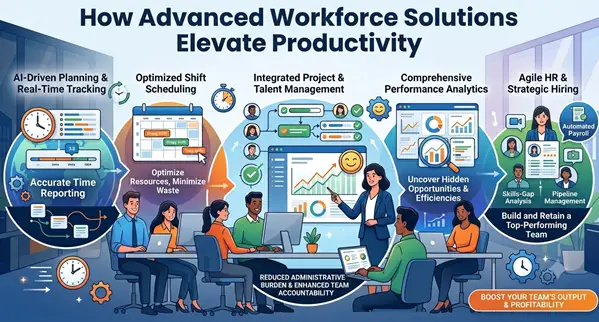
Most businesses lose hours every week without even realizing it. Someone forgets to log their break, another person rounds up their timesheet, and a manager spends half a day chasing approvals instead of running the business. It sounds small until you add it up across a whole team, month after month. That’s where employee time management software steps in, turning guesswork into real numbers you can act on. It’s not just about clocking in and out anymore. Businesses offering eCommerce Solutions in Canada are already using these tools to keep remote teams accountable and orders moving on time.
This blog breaks down exactly how the right system changes the way people work and why it’s becoming hard to run a serious operation without one.
The Real Cost of Manual Time Tracking
Spreadsheets and paper timesheets feel simple until someone makes a mistake. A missed entry here, a rounded number there, and suddenly payroll doesn’t match hours worked. Managers end up playing detective instead of leading their teams, and that time never comes back.
What Employee Time Management Software Actually Does
At its core, this kind of software tracks when people start work, take breaks, and log off, all without anyone needing to remember a thing. It syncs that data automatically, so there’s no manual entry, no lost paper trail, and no arguments over hours. Everything sits in one place, visible whenever it’s needed.
It Removes the Guesswork From Payroll
When hours are tracked automatically, payroll stops being a monthly headache. There’s no reconciling numbers or chasing people for missing timesheets. The software does the math, and finance teams get accurate figures without spending days double-checking them.
Managers Get a Clear View of Their Team
Managers get to see it instead of guessing who is overworked and who has room for more work. That kind of visibility helps to assign tasks fairly, catch burnout before it becomes a resignation letter, and keep projects on schedule.
It Builds Accountability Without Micromanaging
Nobody likes to be watched all day, and good time tracking tools aren’t meant for that. They just keep a fair record for everyone concerned. Employees realize they are being judged fairly for their work, and that alone helps them concentrate better and produce more.
Remote and Hybrid Teams Finally Make Sense
Managing a team across cities or time zones was a lot of guesswork in the past. Proper tracking makes distance no longer an obstacle. Whether they’re in the office or working from home three provinces away, everyone’s hours are input the same.
E-Commerce Solutions in Canada Depend on Precise Time Data
Online businesses work on a tight schedule. Orders wait to be packed, customer questions wait to be answered, delivery windows wait for no one. Companies building eCommerce Solutions in Canada need accurate time data to know just how many hands are needed when a sale rushes in or on a slow Tuesday afternoon, so staffing never feels like a guess.
Fewer Errors Mean Fewer Disputes
Disputes over pay or hours worked drain trust between employees and management. When the software logs everything automatically and transparently, there’s rarely anything left to argue about. That alone saves HR teams a surprising amount of time and stress.
It Helps Businesses Plan Smarter
Once you can see patterns in how time is actually spent, planning gets easier. You start noticing which projects eat more hours than expected, which shifts run short-staffed, and where you can trim without hurting output. That kind of insight doesn’t come from spreadsheets sitting untouched in a folder.
Employees Actually Prefer It
It might seem counterintuitive, but most employees like having their hours tracked properly. It means they get paid for exactly what they worked, overtime doesn’t get lost in translation, and there’s no confusion during appraisal season about who contributed what.
Regular Check-ins Still Matter
Software gives you the data, but it works best alongside real conversations. A quick weekly check-in helps managers understand the context behind the numbers, like why a project ran long or why someone’s hours dipped. The tool tells you what happened; the conversation tells you why.
Conclusion
Keeping track of time shouldn’t feel like extra work on top of an already busy day. The businesses that get this right tend to run more smoothly, pay people accurately, and make decisions based on real information instead of assumptions.
At Samco Software Inc, we build tools that take the stress out of tracking hours so your team can focus on actual work instead of paperwork. Our employee time management software gives you clear, accurate data your business can rely on every single day, and our experience supporting eCommerce Solutions in Canada means we understand what fast-moving teams actually need.
Reach out to us and let’s build a system that works the way your business does!
FAQs:
1. What is employee time management software?
It’s a digital tool that tracks employee work hours, breaks, and attendance automatically. It replaces manual timesheets with accurate, real-time data.
2. How does time tracking software improve productivity?
It gives managers visibility into how time is spent, helping them assign work fairly and spot inefficiencies early. This leads to better planning and fewer wasted hours.
3. Is time tracking software good for remote teams?
Yes, it standardizes how hours are logged no matter where an employee is working from. This keeps remote and hybrid teams accountable and easy to manage.
4. Does this software help with payroll accuracy?
Absolutely, it removes manual calculations and rounding errors from the payroll process. Finance teams get precise numbers without chasing missing timesheets.
5. Will employees feel micromanaged by this software?
Not when it’s implemented properly, since it simply records hours rather than monitoring every action. Most employees actually prefer having accurate, fair records of their work.
6. How does eCommerce Solutions in Canada use time management software?
Online retailers use it to staff shifts correctly during busy sales periods and slower days. It ensures orders are processed on time without overstaffing or understaffing.
