A Cost vs Value Story Most Growing Businesses Recognize
Imagine your business didn’t fail because of poor sales or weak demands. It stalled because your cloud accounting software didn’t keep up.
Invoices lived in one place.
Payroll lived in another.
Inventory set in spreadsheets.
Records were always “almost ready”—but never real-time.
Decisions were made on outdated numbers.
You get this reality check after evaluating cloud accounting software for medium-sized businesses!
In this blog, we’ll show how SAMCO’s cloud accounting software can streamline your operations, improve financial accuracy, and scale with your business—so you can make faster, smarter decisions with confidence.
Why Accounting Software Becomes a Growth Bottleneck
Most accounting tools work well—until they don’t. As businesses move beyond early-stage operations, they encounter challenges that entry-level accounting tools weren’t designed to handle. Using advanced cloud accounting software can solve issues like
- Multiple users entering data simultaneously
- Complex payroll, tax, and compliance rules
- Multi-company or multi-location reporting
- Custom workflows that don’t fit rigid software templates
Did you know the cloud accounting software market is growing strongly—from $4.9 billion in 2024 to an expected $5.39 billion in 2025 at a CAGR of 9.9%? (Source)
Why? Because generic cloud tools focus only on simplicity that’s helpful early on. As transaction volumes grow, entry-level tools often fail, which is why investing in robust cloud accounting software is critical.
Understanding the “Cost” Side of Cloud Accounting Software
Investing in cloud accounting isn’t just about subscription fees. There are several factors to consider:
- Subscription and Licensing Fees
Most cloud accounting software operates on a subscription basis. While this spreads out costs, the true cost comes from:
- Downtime
- Manual system maintenance
- Data recovery after failures
Cloud solutions replace these unpredictable costs with predictable monthly fees.
- Implementation and Migration
Advanced cloud accounting software may take longer to implement but avoids expensive replacements later.
- Operational Change
The United States Census Bureau reported that rising U.S. household income—$80,610 in 2023—drives businesses to adopt efficient cloud accounting software. (Source)
How does cloud accounting software make teams work better?
- Automation replaces manual entry
- Real-time collaboration replaces spreadsheet emails
- Role-based access replaces all-or-nothing permissions
The learning curve exists—but the efficiency gains are substantial.
The “Value” Side: What Medium-Sized Businesses Gain
The benefits of cloud accounting go beyond cost savings. Here’s what medium-sized businesses stand to gain:
- Reduced Manual Work and Errors
Modern cloud accounting software automates repetitive tasks such as journal processing, recurring entries, and standard reporting. Automation doesn’t just save time—it reduces human error and improves data accuracy.
- Real-Time Financial Visibility
With cloud access, financial data updates instantly across users. This means:
- Management can review P&L, cash flow, and budgets anytime
- Bookkeepers generate reports without data duplication
- Stakeholders work from a single, accurate source of truth
This shift turns accounting from a backward-looking function into a real-time decision tool.
- Scalability Without Replacements
Rather than switching software every few years, modular cloud accounting platforms allow businesses to add users, entities, and functionality without starting over.
Scalability is one of the main reasons businesses are investing in cloud accounting, as highlighted by the projected CAGR of ~9.5% to 2029. (Source)
This continuity protects institutional knowledge and avoids disruption.
- Compliance and Payroll Confidence
As businesses grow, compliance pressure increases—especially in regions like Canada and Quebec. Cloud accounting software supports:
- Audit trails
- Role-based access
- Payroll controls
- Regulatory updates
This reduces compliance risk and improves confidence during audits.
- Customization That Matches Your Workflow
Rigid systems force businesses to adapt their processes to software. Flexible platforms allow:
- Custom charts of accounts
- Segmented reporting
- User-defined periods
- Workflow customization
This alignment is often the difference between “using” accounting software and actually relying on it.
Cost vs Value: The Real Comparison
When buyers compare cloud accounting solutions, price alone rarely tells the full story. The real comparison comes down to outcomes:
| Decision Area | Entry-Level Cloud Tools | Advanced Cloud Software |
| Handles complexity | Limited | Designed for growth |
| Custom workflows | Minimal | Extensive |
| Audit readiness | Basic | Strong |
| Downtime resilience | Shared risk | Built-in protection |
| Scalability | Restricted | Modular |
Insight: The lowest-cost cloud accounting tools option often becomes the most expensive when limitations force workarounds or system replacement.
SAMCO vs QuickBooks vs Sage vs Xero: What Actually Matters
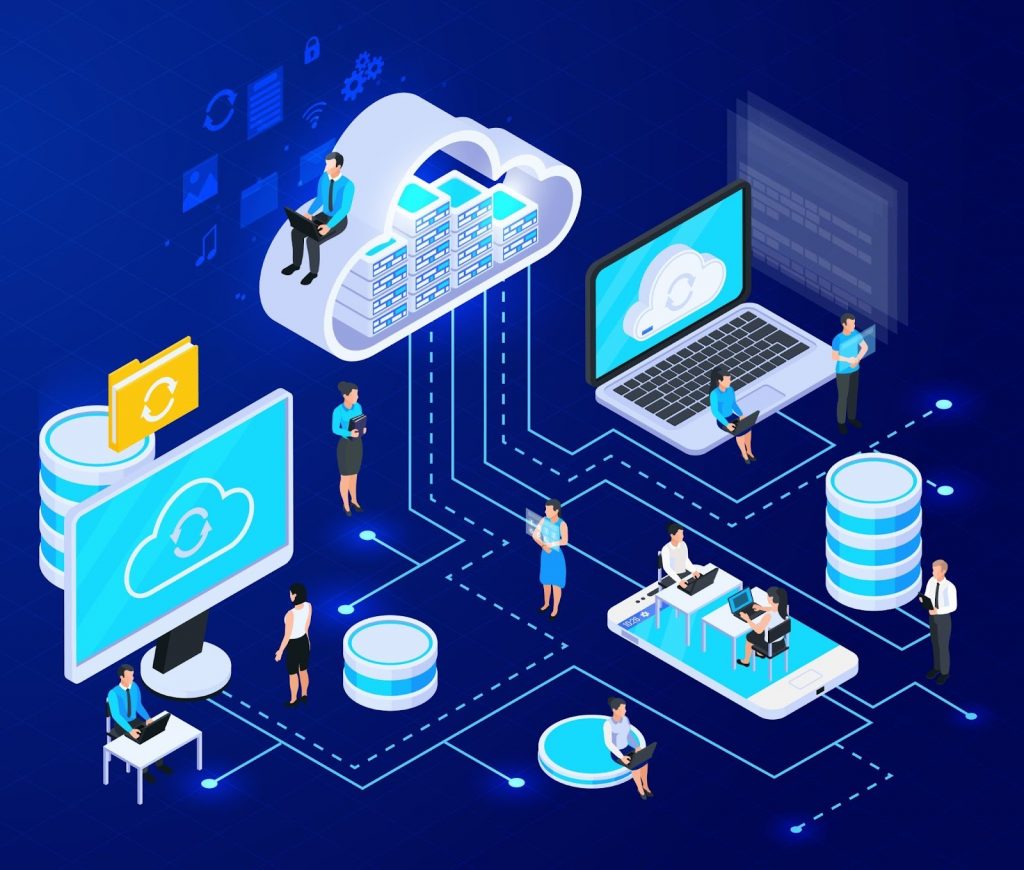
When buyers compare cloud accounting software, feature lists can look similar on the surface. What separates platforms isn’t what they claim to do—it’s how well they handle complexity as your business grows.
Below is what each capability really means in day-to-day operations.
| Feature | SAMCO | QuickBooks | Sage | Xero |
| Core Architecture & Deployment | Hosted private cloud, modular, Canadian compliance, secure VPN, offsite backups | Cloud-based, easy setup, best for simple SMBs | Scalable cloud suite, strong compliance | Pure cloud-native, real-time collaboration, broad integrations |
| Feature Capabilities & Complexity | Advanced GL, payroll, inventory, multi-entity, highly customizable | Moderate GL & inventory, limited multi-entity, basic payroll | Strong GL, payroll, reporting, multi-company support | Flexible reporting, collaboration, payroll & inventory require add-ons |
| Security & Compliance | Private cloud, encrypted VPN, offsite backups | Public cloud, bank-level security | Public cloud, strong compliance | Public cloud, bank-level security |
| Scalability & Best Fit | Medium-sized businesses with complex workflows and Canadian compliance | SMBs scaling from small to mid-market | Larger SMBs with compliance, payroll, multi-entity needs | SMBs wanting collaboration, integration, ease of use |
How SAMCO Fits the Needs of Medium-Sized Businesses
SAMCO doesn’t position itself as a “one-size-fits-all” accounting tool. Instead, it delivers powerful accounting and business applications on a hosted, private cloud basis.
- Designed Specifically for Medium-Sized Businesses
- For complex capabilities
- For predictable monthly costs
- To avoid managing servers
- Require strong security and compliance
- SAMCO’s Private Cloud Platform
SAMCO’s private cloud platform offers modular tools for medium-sized businesses.
- General Ledger (GL) tracks all financial transactions.
- Accounts Receivable manages incoming payments.
- Accounts Payable handles vendor bills.
- Inventory Management monitors stock.
- Purchasing streamlines procurement.
- Billing simplifies invoicing.
- Sales Analysis provides insights into revenue trends.
Together, these modules create an integrated cloud accounting software that enhances efficiency, accuracy, and real-time financial visibility.
Questions Smart Buyers Ask Before Choosing a Cloud Accounting Software for Medium-Sized Business
- How does cloud accounting handle multi-location or multi-entity reporting?
Advanced systems allow consolidated reporting across entities, currencies, and locations, providing a unified view of financial health in real-time.
- What do hosting and security look like?
Private cloud, encrypted VPN, offsite backups, and disaster recovery provide peace of mind.
- What happens to our data if there’s downtime or a disaster?
Advanced cloud systems include redundancy, backups, and failover options if there’s downtime or a disaster.
- Will my team need training to use cloud accounting software?
Yes, but most platforms provide onboarding, tutorials, and support. Efficiency gains usually outweigh initial learning efforts.
- How secure is cloud accounting software?
Private cloud solutions like SAMCO offer encrypted VPN access, offsite backups, and disaster recovery. Generic cloud platforms provide bank-level encryption and automatic backups but less private control.
Final Verdict: Is SAMCO’s Approach of Cloud Accounting Worth the Investment?
For medium-sized businesses, the answer isn’t just yes. It’s yes—if you choose the right platform that matches the complexity of the business. Cloud accounting isn’t about moving spreadsheets online. It’s about making faster, safer, and better decisions with complete confidence in your data.
SAMCO’s approach stands out because it combines:
- Cloud convenience
- Private cloud security
- Modular flexibility
- Real-world scalability
See how SAMCO SOFTWARE INC. hosted, modular cloud accounting software fits your current challenges—and future growth. Schedule a Demo Now!
